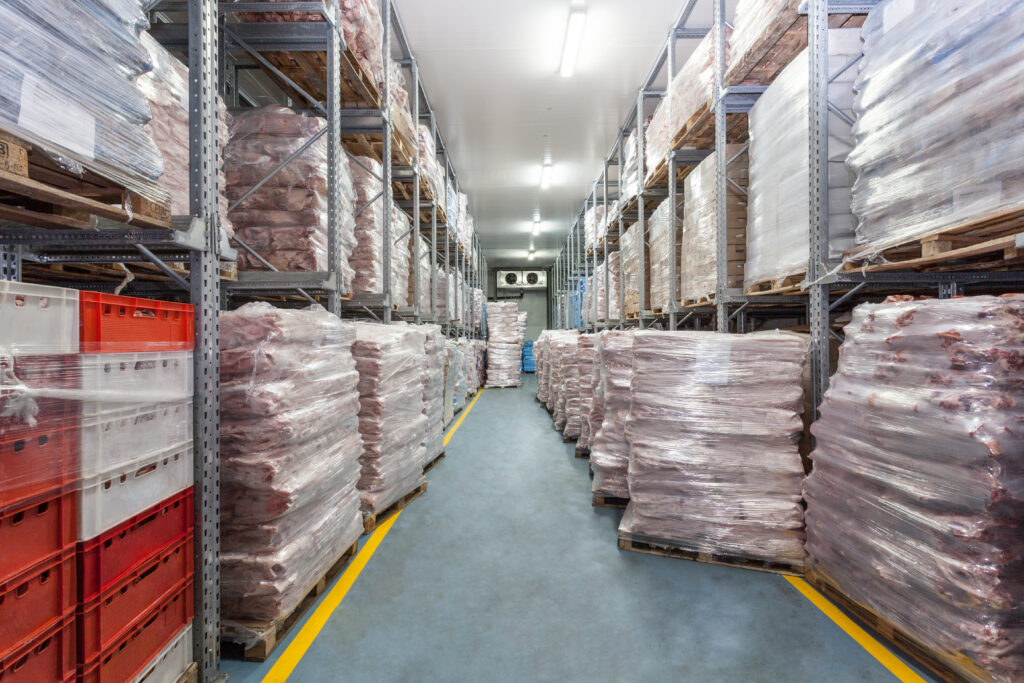
Cold storage 3PLs win business by saying yes to requirements their competitors cannot handle. That is especially true in third-party logistics, where the ability to meet a customer’s specific operating needs can be the difference between winning an account and losing it.
A custom label. A shelf-life rule. An inspection. Catch-weight processing. A customer-specific report. A special handling request.
The problem is not the request. It is what happens when the work needed to fulfill it sits outside the operational workflow and never reaches billing.
That is where margin leakage begins: not with one major failure, but with dozens of small services, reconciliations, and exceptions that become normal before anyone sees their full cost. In a cold chain operation, those hidden costs can put pressure on profit margins long before they appear in a financial review.
One Reasonable Request at a Time
A modern cold storage warehouse may support dramatically different operating requirements under the same roof.
One account requires FEFO. Another has specific shelf-life rules. A third needs specialized labeling, inspections, or reporting. Products may require catch-weight processing. Customers may use different integrations, request value-added services, or negotiate unique storage and handling charges.
Commercially, each request can look straightforward. Operationally, one new customer can create dozens of decisions about labor, equipment, staging, inventory rotation, documentation, reporting, and billing.
Operations teams are resourceful. They find a way to make the work happen.
A spreadsheet is added. Someone performs a manual reconciliation. An employee remembers the special handling requirement. Billing is adjusted after the fact. Another report is assembled outside the normal workflow.
The customer is served. But the cost to serve that customer becomes harder to see, and harder to recover.
The Cost of Work No One Captures
Every customer-specific activity has an economic consequence. It takes labor, equipment, time, documentation, or all four. Yet accessorial services, inspections, relabeling, returns, special handling, blast freezing, and storage exceptions are not always captured accurately when execution and commercial processes are disconnected.
That creates a particularly difficult form of revenue leakage. There may be no obvious failure.
Revenue is still coming in. Customers are still being served. Inventory is still moving.
Meanwhile, administrative effort grows. Employees spend more time reconstructing activity after the fact. Onboarding takes longer. Spreadsheets multiply. Managers get pulled into exceptions. And some work may never make its way into billing at all.
The result is not simply an accounting problem. It is an account-profitability problem. A customer can appear valuable based on revenue while becoming progressively more expensive to serve, quietly reducing profit margins.
Catch Weight Shows How Quickly Complexity Spreads
Catch-weight products are a useful example.
An operation may receive, store, pick, and ship product according to its actual weight while charging according to different units of measure, handling activities, or customer-specific rules. That creates a direct connection between the warehouse record and commercial performance.
When the operational record and billing logic stay aligned, the work can be captured as it occurs. When they do not, employees may have to reconstruct transactions manually. That creates more administrative effort, more opportunity for error, and more opportunity for revenue to be missed.
The issue is bigger than catch weight. The same pattern applies whenever a customer has a unique service, rule, or exception.
The operation needs to know what happened, why it happened, which customer required it, and whether the activity should be billed. Otherwise, customer complexity becomes invisible work.
What Castellini’s Experience Shows
Castellini Group operates a 200,000-square-foot facility with seven temperature zones ranging from 50°F to -10°F. It supports refrigerated produce and home-meal fulfillment customers with different picking, shelf-life, and value-added-service requirements.
As the business grew, its legacy WMS struggled to coordinate inventory, fulfillment, and billing for services such as dumping, grading, special storage, and sustainability activities. Castellini needed more dynamic pricing and a better way to capture accessorial work.
With a more connected operating model, the company gained greater flexibility in how it priced services and could capture accessorial charges as work occurred.
The lesson is straightforward: customer complexity becomes a profitability issue when the work required to serve an account is disconnected from the way that work is recorded and billed.
The Goal Is Not Fewer Customer Requirements
Cold storage 3PLs should not resist customer-specific requirements. The ability to support them is often a real competitive advantage. The goal is to make complexity easier to manage.
That means configuring customer requirements into workflows instead of layering them on through manual workarounds. Operational activity, customer commitments, and billing rules should remain connected as the work occurs.
This becomes more important as the business grows:
- A new customer arrives.
- A new service is introduced.
- Another facility opens.
- Automation expands.
- The company moves into an adjacent market with different inventory, reporting, or compliance requirements.
Without an adaptable foundation, each change adds friction. Development queues grow. Workarounds multiply. Employees spend more time reconciling exceptions. Growth exposes weaknesses that smaller volumes were able to conceal.
Find the Work You Are Not Seeing
Cold storage executives usually begin profitability discussions with labor, utilization, throughput, and customer revenue. Those measures matter. But they do not always reveal the operational cost of customer complexity.
Ask a different set of questions:
- Where are customer-specific requirements creating activity we do not consistently capture, control, or bill?
- Which accommodations depend on spreadsheets or employee memory?
- How much administrative effort goes into reconstructing activity after it occurs?
- Which accounts are operationally more expensive to serve than their revenue alone suggests?
- Which services are difficult to price because execution data is incomplete or disconnected?
The answers can expose costs hidden inside otherwise successful customer relationships. They can also reveal where a more adaptable operating model would allow the business to offer differentiated service without letting complexity consume the margin it was meant to create.
Complexity Is Part of a Larger Operating Shift
Customer-specific requirements are only one of the forces changing cold storage. Consolidation, evolving compliance expectations, automation, and changing fulfillment models are all placing new demands on warehouse operations.
The Datex executive guide, The New Rules of Cold Storage Operations, examines those forces and the role operational adaptability plays in helping cold storage 3PLs turn complexity into competitive opportunity.
Is complexity starting to cost more than it earns? Download the guide to explore the market, operational, and technology changes reshaping cold storage
Frequently Asked Questions
Margin leakage, sometimes described as revenue leakage, occurs when the labor, equipment use, documentation, inspections, relabeling, storage exceptions, or other services needed for an account are not accurately captured and billed. It often develops through manual workarounds, disconnected systems, and customer-specific processes that sit outside standard workflows.
Accessorial charges are easier to capture when warehouse workflows, customer-specific service rules, and billing logic are connected. When an inspection, relabeling task, special handling activity, or storage exception is recorded as work occurs, the operation has a clearer record of what happened, for whom, and whether it should generate a charge.
Cold storage operations often support different shelf-life rules, rotation methods, temperature requirements, labeling standards, reporting needs, and value-added services under one roof. Without configurable workflows, each requirement can create manual steps, employee-dependent knowledge, and billing exceptions that become harder to manage as the customer base grows.
Catch-weight inventory management tracks products by actual weight, even when they are ordered, stored, picked, or billed using other units of measure. It is common with variable-weight products such as meat, seafood, cheese, and produce. Accurate catch-weight management requires warehouse records and commercial rules to remain aligned.
It may be time to reassess the WMS when customer-specific requirements routinely depend on spreadsheets, manual reconciliation, employee memory, or billing adjustments after the work is complete. Other warning signs include slow customer onboarding, rising exception volume, difficulty supporting new services, and limited visibility into account-level profitability.
Yes. A capable WMS can connect customer-specific operational activities, such as inspections, relabeling, special storage, or catch-weight handling, to the business rules that determine whether and how those activities are billed. This reduces manual reconciliation and gives operators a clearer view of the cost of serving each account.